What Is a Bûche de Noël? The Yule Log's History and Why It Suits an Aussie Christmas
Every December, someone still insists on hot plum pudding, even when Western Sydney is sitting near 30°C.
The French have a better answer: the bûche de Noël, a rolled sponge cake dressed as a log, and it handles an Australian summer far better than anything steamed.
As a French patisserie, we make yule logs every Christmas.
Below, I'll explain what a bûche de Noël is, where it really came from (and which origin stories are myth), and why more Sydney families now choose it for Christmas.
Key Takeaways
- A bûche de Noël is a rolled sponge cake decorated to look like a log, named after the firewood French families once burned at Christmas.
- Paris pâtissiers popularised the yule log cake in the late 1800s, though the popular story crediting Napoleon's chimney ban has no historical record behind it.
- Families with roots in Lebanon, Vietnam, France and Quebec already serve log cake at Christmas, which helps explain why it's spreading across Sydney.
- France already has a frozen version, the bûche glacée, and that tradition makes an ice cream yule log a natural fit for Australian summer Christmases.
What Is a Bûche de Noël (Yule Log)?
A bûche de Noël, or yule log, is a French Christmas cake made from a thin sponge that's spread with filling, rolled into a cylinder, then coated and textured to look like a freshly cut log. The name translates literally: bûche means log and Noël means Christmas.
It's pronounced 'boosh duh no-el.'
The classic version uses a génoise, the light French sponge that gets its lift from whipped eggs rather than baking powder. Chocolate buttercream is the traditional filling and coating, though pâtissiers now fill their logs with everything from praline to mousse to gelato.
What most home bakers underestimate is the roll itself. The sponge has to be baked thin and rolled while it's still warm and pliable, otherwise it cracks along the outside curve. Pâtissiers roll it within minutes of it leaving the oven, usually in baking paper or a tea towel, so it sets into a spiral before the filling goes in.
Skip that step and you end up with a log held together by buttercream instead of a clean swirl in every slice.
Where Did the Bûche de Noël Come From?
The cake is less than 150 years old, but the tradition behind its name is far older. Here's how a log on the fire became a log on the dessert plate, and which part of the story you can safely ignore.
The Original Yule Log Was Real Firewood
Long before it was a cake, the yule log was a large, heavy piece of wood chosen for the hearth. Families lit it on Christmas Eve and rekindled it each day until Twelfth Night, and in many homes a leftover piece was saved to light the following year's log.
The name traces back to Yule, a midwinter festival with Norse roots that, according to Britannica, was later absorbed into Christmas. Light, fire and feasting ran through those celebrations, so a blazing log fitted right in. There's a neat twist for Australian readers here: the solstice that Yule marked falls in June for us, which is why our yule logs arrive in the middle of summer.
By the 1700s, burning a Christmas log had faded across much of France. The most common explanation is practical. As homes moved from wide open hearths to smaller fireplaces and stoves, there was nowhere left to burn a log that size.
How Paris Pastry Chefs Turned It Into a Cake
The cake version belongs to the Paris pâtisseries of the late 19th century. Pierre Lacam, a pastry chef who had once been ice cream maker to the Prince of Monaco, published one of the earliest known recipes in his Mémorial historique et géographique de la pâtisserie in the 1890s. Lacam himself credited the idea to Antoine Charabot of Maison Quillet, who is said to have created it around 1879.
Even that account is contested. Several pastry houses claimed the invention, Lyon has supporters who insist the cake started there, and sources don't agree on the exact year Lacam's book came out. What historians do agree on is that the name came first. Bûche de Noël originally meant the burning log itself, and it passed to the cake once the fireside custom had died out.
The rolled sponge that made a yule log possible was fairly new at the time. Rolled "jelly cakes" and "Swiss rolls" were appearing in print from the 1850s, which handed Paris pâtissiers the perfect shape to dress up as a log.
The Napoleon Chimney Story (and Why We Call It a Legend)
You'll often read that Napoleon ordered Parisians to keep their chimneys closed in winter to stop illness spreading, and that bakers invented the cake to replace the log nobody could burn anymore. It's a charming story.
I've never found a decree, a newspaper report or any record from the period to support it, and the timeline is awkward: Napoleon I died in 1821, while the cake doesn't appear in writing until the 1870s. We treat it as legend, and so should anyone retelling the history at the Christmas table.
Why Is a Bûche de Noël Decorated Like a Log?
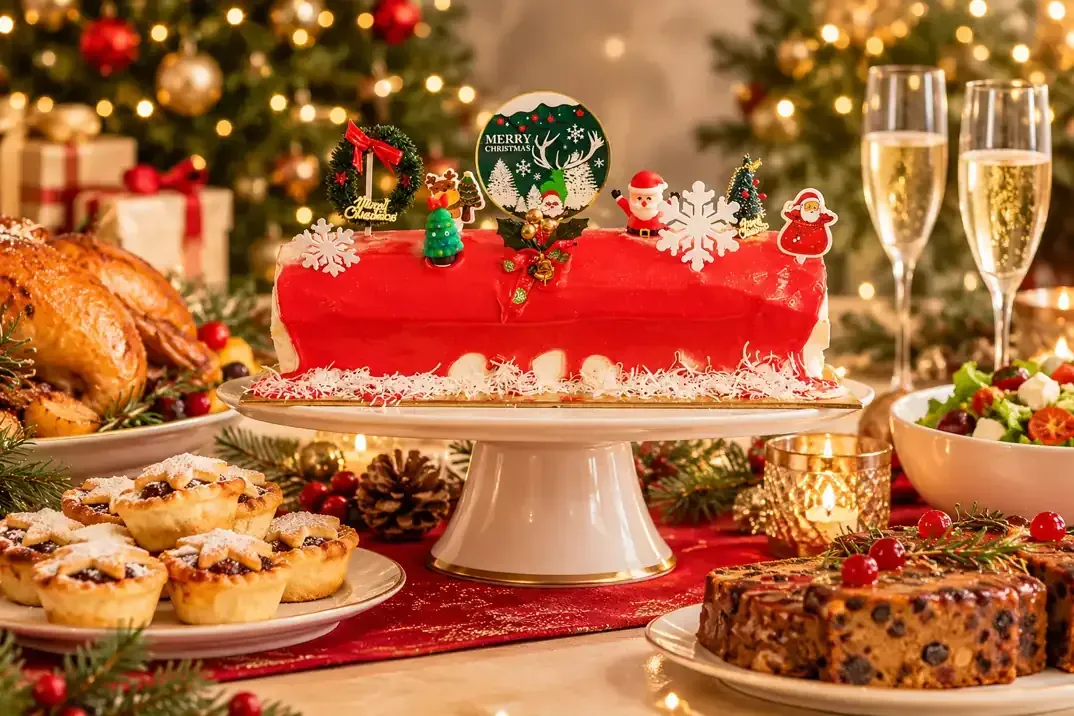
The decorations keep the cake's origin in plain sight. A yule log should look as though someone carried it in from a winter forest, and each classic detail adds to that picture:
- Bark: buttercream or ganache combed lengthways with a fork or a serrated scraper.
- The stump: one end is cut on an angle and set on top or to the side, like a branch sawn off the trunk.
- Mushrooms: piped meringue, often dusted with cocoa so they look earthy.
- Holly, berries and moss: marzipan leaves, fresh or candied berries, and sometimes pistachio crumbs for moss.
- Snow: a light dusting of icing sugar.
The log on the table carries the same wishes the one on the fire once did: warmth, plenty and good fortune for the year ahead. That said, modern pâtissiers have loosened up. Plenty of Paris houses now release logs that look nothing like wood, putting flavour and design ahead of realism. In a Sydney December, the decorations also have to survive a car ride in the heat, so we keep ours festive but sturdy.
Why the Bûche de Noël Is Becoming a Christmas Favourite in Australia
For a lot of Australians, the yule log used to be something they watched contestants struggle with on British baking shows. Three things have brought it onto our own Christmas tables.
It's Already a Christmas Tradition for Many Sydney Families
The bûche de Noël never stayed in France. It's a Christmas staple in Belgium, Switzerland, Luxembourg and Quebec, and it took root in places with strong French ties, including Lebanon and Vietnam. A Vietnamese newspaper was advertising lessons in baking a bûche as early as 1941, and the cake is still a December fixture in Vietnamese bakeries. Italy has its own take too, the tronchetto di Natale.
Sydney is home to large Lebanese, Vietnamese and Italian communities, and many of those families grew up with a log cake at Christmas long before it showed up in mainstream cake shops here. When they order a yule log, they're keeping their own tradition going. Their friends and neighbours try a slice at Christmas lunch, and the habit spreads.
It Suits a Summer Christmas Better Than Plum Pudding
Most of our traditional Christmas desserts came from Britain, where 25 December falls in midwinter and steamed pudding with hot custard makes sense. Our December looks very different. Out at Penrith, where one of our stores sits, the Bureau of Meteorology records an average December maximum of 29.8°C. A yule log is served cool, cuts into neat slices, and sits far more lightly after a lunch of prawns and ham.
France has also proven the cake works frozen. The bûche glacée, an ice cream yule log, is a standard Christmas and New Year dessert there, sold everywhere from Paris ice cream parlours to supermarket freezers. Gabriel Gaté, the French-born chef many Australians know from SBS, makes his bûche with nougat ice cream for exactly this reason: it suits a hot Australian Christmas.
It Works With Almost Any Flavour
Once you have a rolled sponge and a filling, a yule log can go in almost any direction: coffee, chestnut, praline, berries, tropical fruit. In Vietnam and Cambodia, French-style bakeries lighten it with chiffon sponge, whipped cream and tropical fruit flavours. Closer to home, the Dubai chocolate craze put pistachio and crunchy kataifi into everything from chocolate bars to cakes, and the yule log took to it easily.
That range lets a family keep the tradition while still choosing a flavour everyone at the table will actually eat.
How We Make Our Bûche de Noël at Profiterole Patisserie
As a French patisserie, we keep the bones of the classic bûche: a rolled sponge, a generous filling and a festive finish. What changes is the inside, because our Christmas lands in the hottest stretch of the Sydney year.
Why We Make an Ice Cream Bûche de Noël
The reasoning behind our ice cream log is simple. Christmas in Sydney falls in summer, so a cold, refreshing yule log is the logical choice. We start with a rich vanilla Swiss roll, fill it with three flavours of gelato instead of buttercream, and finish it with Christmas decorations.
There are two gelato combinations. The nut-free set pairs strawberry, mango and chocolate, which makes it a safe pick when there are nut allergies at the table. The classic set brings together pistachio, hazelnut and chocolate for a richer, nuttier slice. It's a fitting link to the cake's history, too, since Pierre Lacam, who wrote down one of the first bûche recipes, began his career making ice cream.
Our Classic Logs, Made the French Way
Gelato suits a scorching afternoon, but sponge and buttercream is the texture many people picture when they think of a bûche, and our classic logs get exactly the same care. The Belgian chocolate log is the one Lacam would recognise most easily: a chocolate Swiss roll filled and coated with Belgian chocolate buttercream, combed into bark and decorated for Christmas. It's nut-free, so it works well for mixed groups.
The hazelnut praline log pairs a vanilla Swiss roll with hazelnut praline buttercream. Praline is a French pantry staple, made by caramelising nuts in sugar and grinding them into a paste, and it gives the filling a toasty depth that balances the light sponge.
The Dubai Chocolate Log
Our Dubai log takes its cue from the trend that swept Australian dessert counters. A chocolate Swiss roll is filled and coated with Belgian chocolate and pistachio kataifi, the shredded pastry that gives Dubai chocolate its crunch. Each slice gets soft sponge, smooth chocolate and a crisp, nutty layer at once. It does contain pistachios, so keep it away from guests with nut allergies.
Across the whole range, we use vegan gelatine, keep every log alcohol-free, and can make any of them eggless on request. Our yule logs are made for the Christmas season only, so if you'd like one on your table, you can pre-order online or drop into any of our Sydney stores.
Keeping Your Yule Log at Its Best in the Sydney Heat
A yule log is only as good as the condition it reaches the table in, and a hot car is its biggest enemy. Food Standards Australia New Zealand advises keeping cold food at 5°C or colder in transit, using insulated containers with ice bricks, and making sure frozen food stays frozen hard. Here's how that plays out for each type of log:
- Ice cream logs: We offer these for pick-up only, so the cake goes straight from our freezer to yours. Bring a cooler bag (you can add one to your order), drive home directly and get the log into the freezer as soon as you arrive. Give it about 10 minutes on the bench before slicing so the knife glides through the gelato.
- Buttercream and chocolate logs: Keep these in the fridge until serving day. Take them out 20 to 30 minutes before you cut them, because cold buttercream turns firm and dulls the flavour.
- Leftovers: Ice cream logs go straight back in the freezer. Buttercream logs go back in the fridge, covered, with the cut end protected, and how long they keep depends on the filling.
A French Christmas Tradition, Made for Sydney Summers
A bûche de Noël asks for more precision than it lets on. The sponge has to be thin enough to roll without cracking, the filling has to hold its shape, and the whole cake has to stay at the right temperature from the kitchen to your table. Get those details right and you're serving a dessert with nearly 150 years of Paris pâtisserie history and a much older fireside story behind it.
For many Sydney families, the yule log is already part of Christmas, carried here from Lebanon, Vietnam, France or Quebec. For others, it's a newer tradition that finally suits the weather. Either way, a log cake gathers everyone for the same reason the original log did: to share something warm in spirit at the close of the year. It's a tradition we're proud to keep alive at Profiterole Patisserie every December, in a form made for our summer.
I'd love to welcome you to any of
our stores in Guildford, Mays Hill, Roselands, Strathfield, Penrith and Melrose Park to see our Christmas logs in person, or you can
order online for pick-up or delivery across Sydney (our ice cream logs are pick-up only).
Publish date: 24/11/2026

Joey Yaccoub
Head Baker & Operations Manager, Profiterole Patisserie
Joey Yaccoub is the Head Baker at Profiterole Patisserie, bringing over a decade of hands-on experience in artisan cake design and pastry craftsmanship.
He oversees recipe development, product quality, and daily operations across all store locations, ensuring every cake meets the brand’s standards for flavour, presentation, and consistency.
FAQs
What is the difference between a Swiss roll and a bûche de Noël?
A bûche de Noël starts as a Swiss roll, so the base is essentially the same: a thin sponge spread with filling and rolled up. The difference lies in the finish and the occasion. A Swiss roll is an everyday cake filled with jam or cream, while a bûche is coated, textured like bark and decorated as a log for Christmas.
Why do we eat log cake during Christmas?
The cake stands in for the yule log, a large piece of wood families once burned from Christmas Eve to Twelfth Night for warmth and good fortune. As that fireside custom faded, Paris pâtissiers recreated the log as a cake in the late 1800s, and eating it became the new way to keep the tradition alive.
What is a French bûche de Noël?
In France, the bûche de Noël is the traditional dessert at the Christmas Eve or Christmas Day meal. The classic version is a génoise sponge rolled with chocolate buttercream and decorated as a log. French pâtisseries now release new designs every year, and frozen versions called bûches glacées are just as common.
Why is it called bûche de Noël?
Bûche de Noël means "Christmas log" in French. The name originally belonged to the actual log burned in the hearth over Christmas. When that custom died out and pâtissiers began making log-shaped cakes, the name moved across to the dessert, and English speakers translated it as "yule log".
Where can I buy Christmas log cake?
Most French patisseries in Australia make yule logs in December, usually as pre-orders. At Profiterole Patisserie, we make ice cream, Belgian chocolate, hazelnut praline and Dubai chocolate logs for Christmas. You can pre-order online or visit any of our Sydney stores. Our ice cream logs are available for pick-up only.
What does a yule log symbolise?
The yule log symbolises light and warmth at the darkest point of the northern winter. Burning it was tied to wishes for good fortune and the return of the sun after the solstice. The cake carries the same meaning in a sweeter form, with decorations that recreate a winter forest.
What is a yule log cake made of?
A traditional yule log has three parts: a génoise or Swiss roll sponge made from eggs, sugar and flour; a filling such as buttercream, cream or mousse; and a chocolate buttercream or ganache coating. Decorations often include meringue mushrooms, marzipan holly, berries and icing sugar snow. Modern versions may use gelato as the filling.
Is a yule log the same as a Christmas cake?
No. In Australia, "Christmas cake" usually means a dense fruit cake packed with dried fruit and often soaked in brandy or rum. A yule log is a light rolled sponge with a creamy or frozen filling. Both are Christmas traditions, and our list of Christmas cake ideas covers both, along with other options for a summer table.
Reserve your Buche de Noel as early as today!
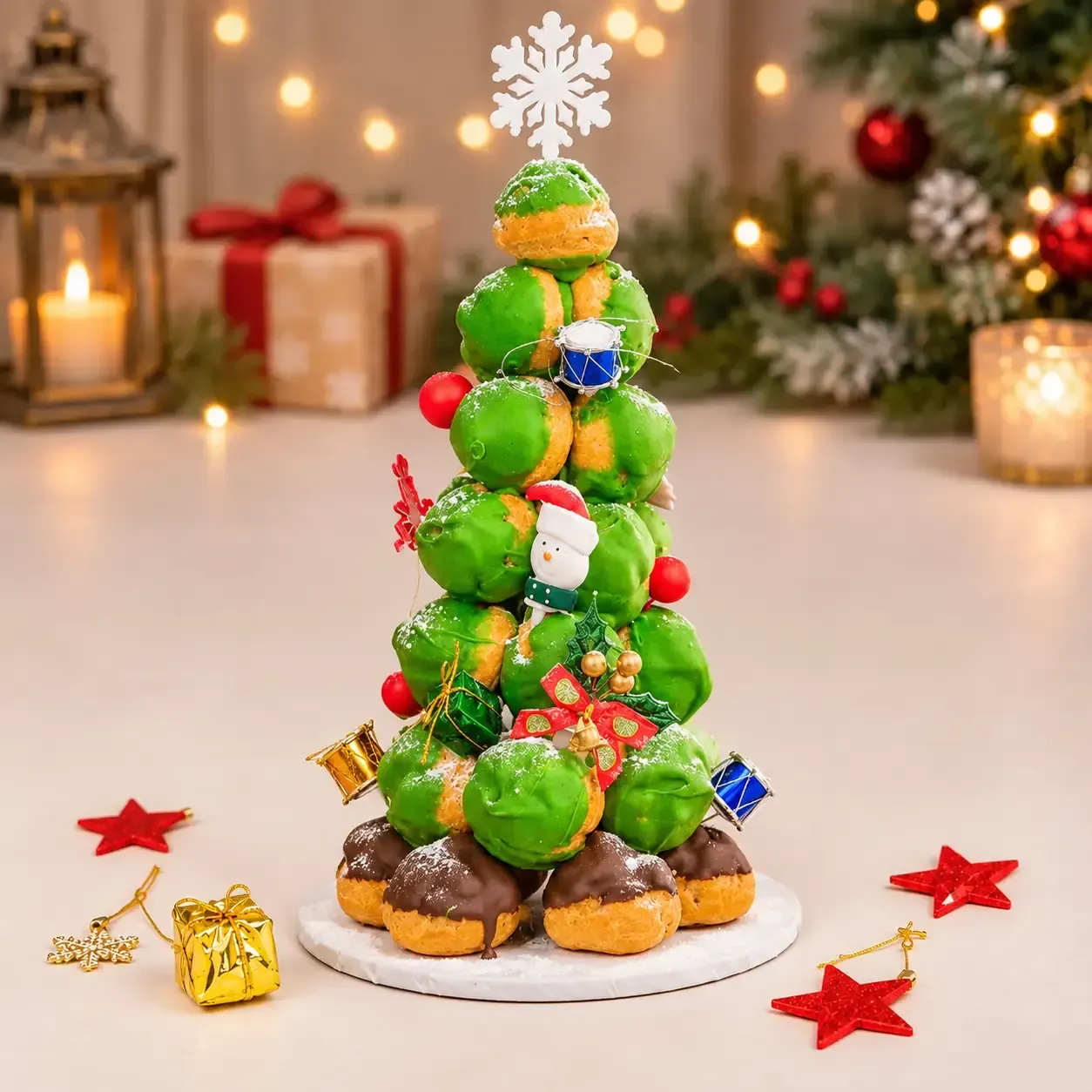
Christmas Tree Cake
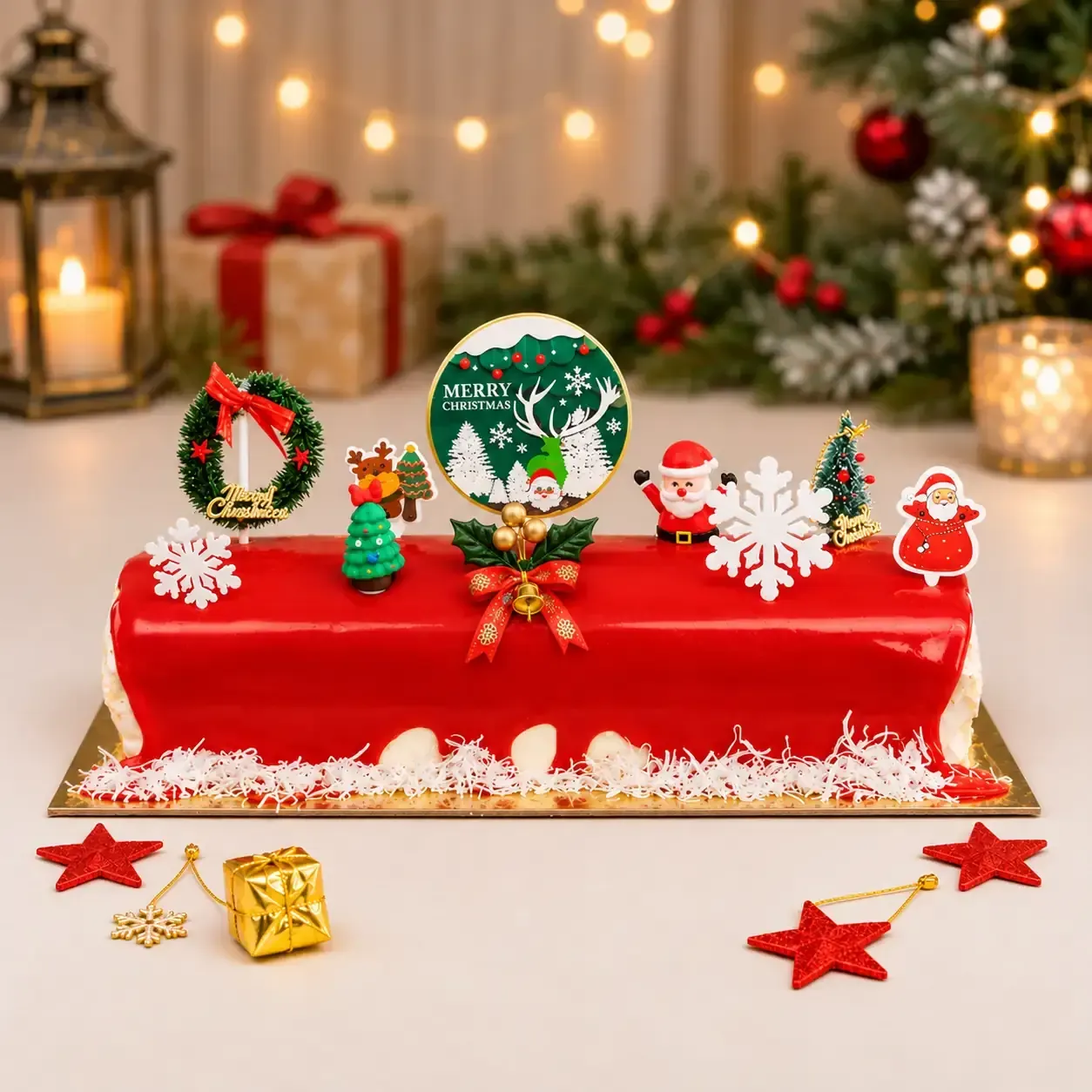
Christmas Log Cake - Ice Cream
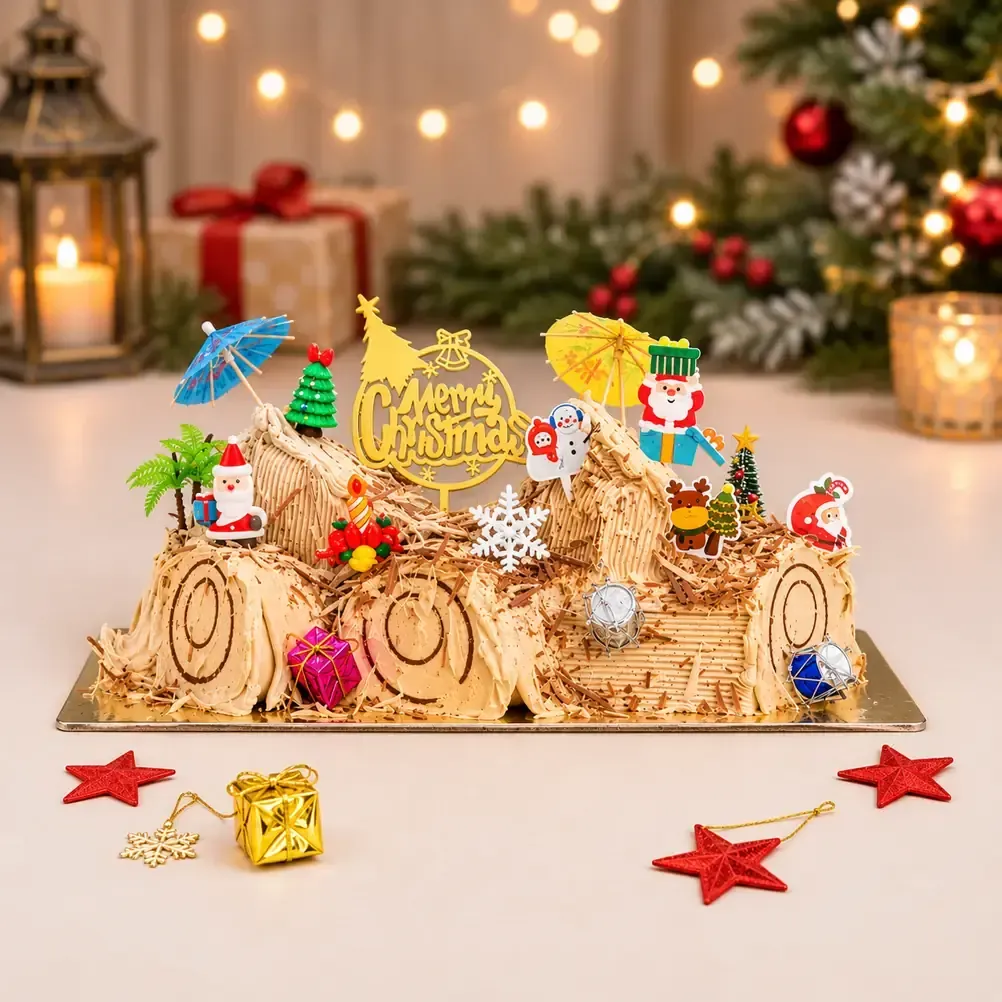
Christmas Log Cake - Hazelnut Praline
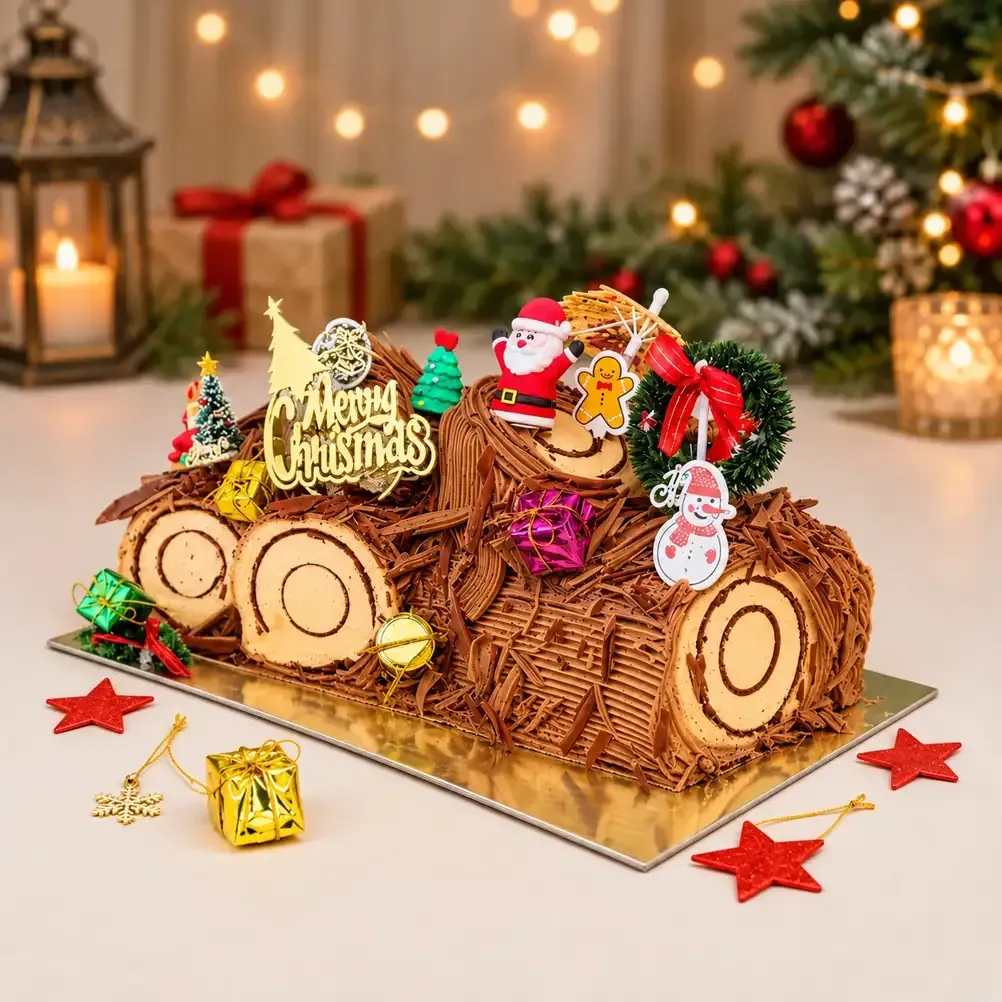
Christmas Log Cake - Belgium Chocolate
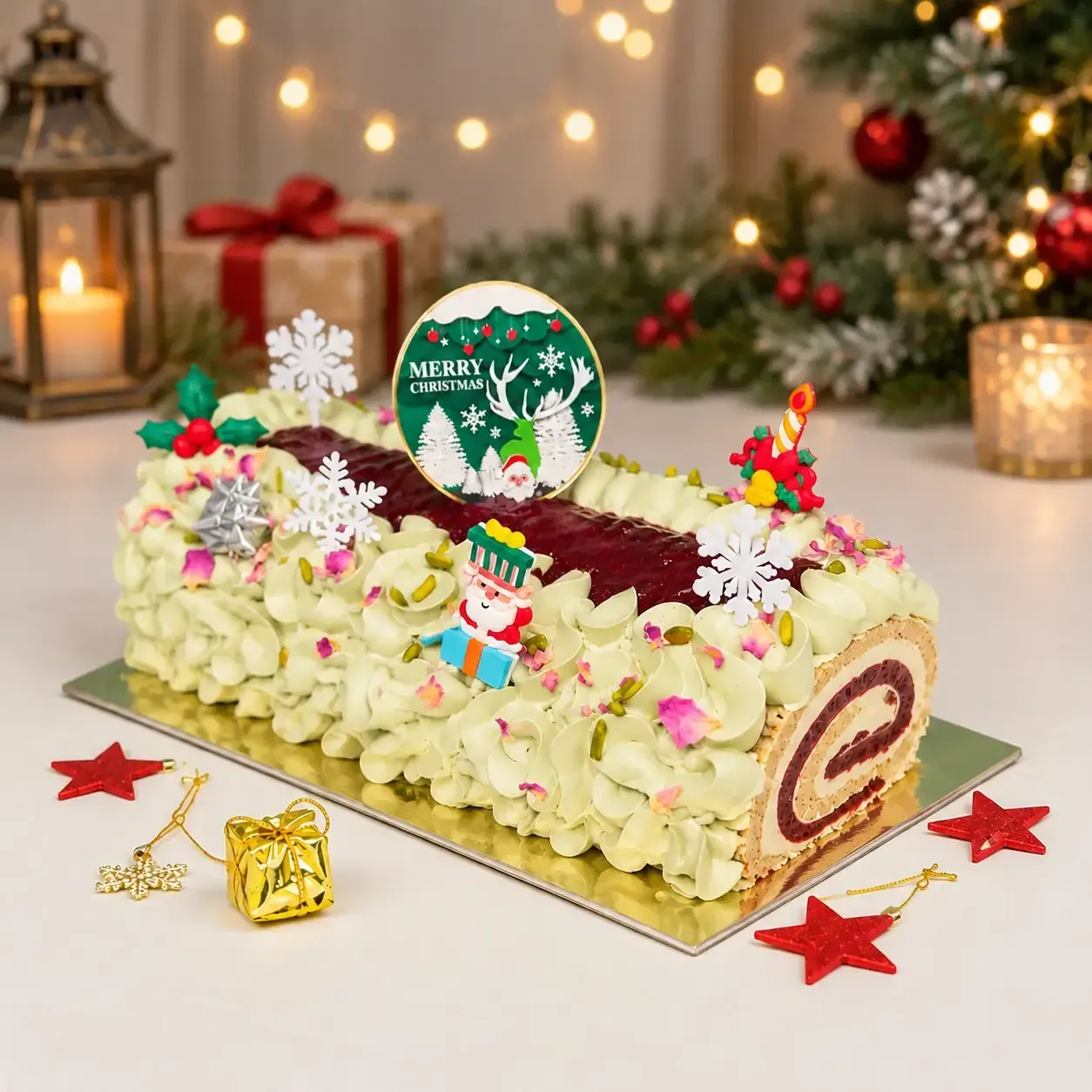
Christmas Log Cake - Pistachio Raspberry Bliss