Dessert Pairing Guide for Beginners: Flavours, Textures and What to Serve Together
You've served a dark chocolate tart at a dinner party, with a fudgy brownie and a scoop of chocolate gelato beside it. Each one tastes great alone. Together, they're so heavy that by the third bite nobody can taste much at all.
Pastry kitchens avoid this with a short list of pairing rules, and those rules work for a single slice at home as well as a full café cabinet.
This guide covers them, the flavour pairings that reliably work, how to pair each type of dessert, and how to build a balanced dessert menu.
Key Takeaways
- Sugar needs a counterweight: a hit of acid, salt or bitterness keeps a dessert from tasting flat and makes every other flavour clearer.
- Every good pairing either complements or contrasts, and building around one main flavour with one supporting partner is the safest place to start.
- Texture and temperature matter as much as flavour, which is why a crisp tuile lifts a mousse and cold gelato suits a warm tart.
- Café owners can balance a dessert menu with the 5 Cs: chocolate, citrus, coffee, custard and caramel, without repeating one hero ingredient.
What Is Dessert Pairing?
Dessert pairing is the practice of putting flavours, textures and temperatures together so each part of a dessert makes the others taste better. Most guides go straight to wine or coffee, but in a pastry kitchen we work through three levels first:
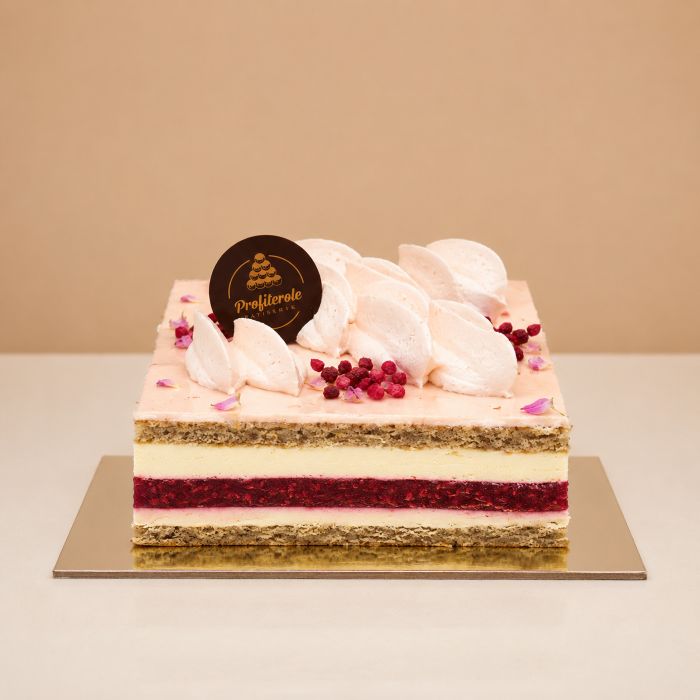
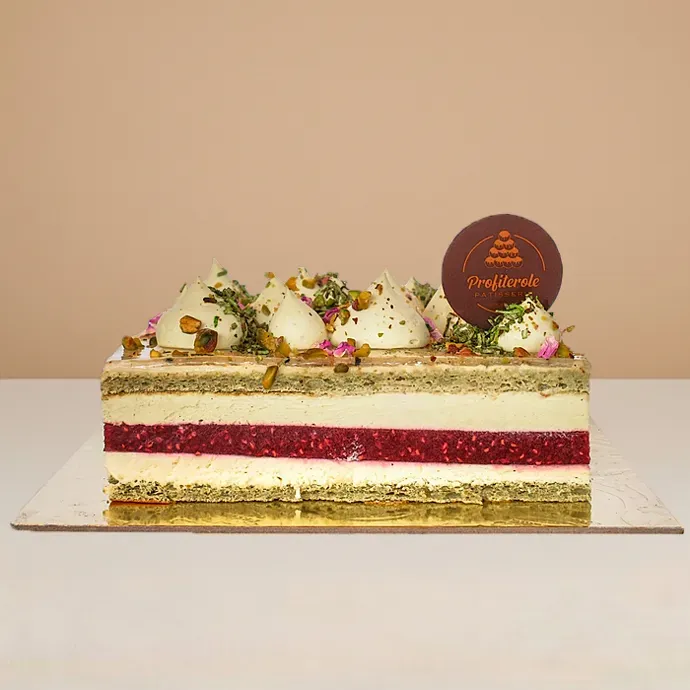
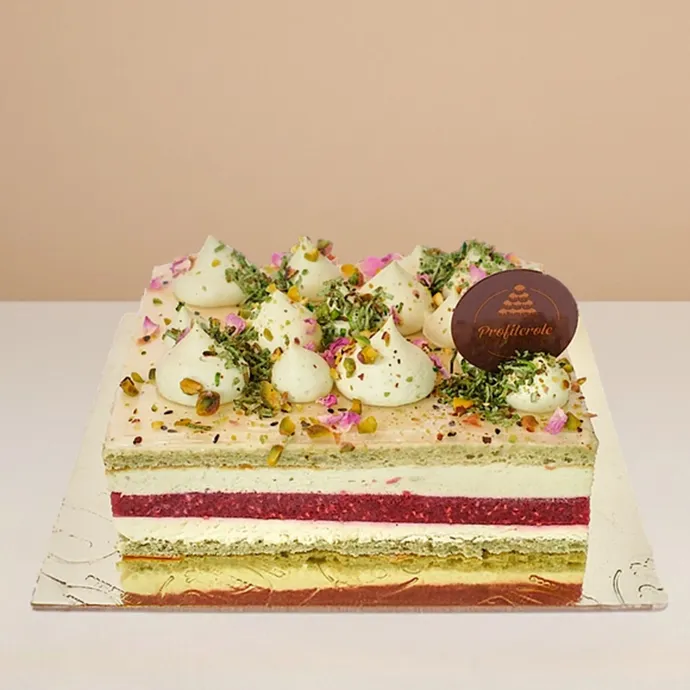
- Inside one dessert: the flavours and layers in a single cake, tart or plated dessert, like the pistachio and raspberry in our Pistachio Raspberry Bliss Cake.
- A dessert and its accompaniment: what goes beside it on the plate, such as cream, fresh fruit, a sauce or a scoop of gelato.
- Several desserts served together: a platter, a dessert table or a café cabinet, where each item has to stand out without clashing with the ones beside it.
The same principles apply at all three levels, so once you learn them on a single slice, they scale up to a full menu.
The Five Principles Behind Every Good Dessert Pairing
These are the five checks a new dessert goes through before it earns a place in our cabinet. They work the same way for a dinner party at home as they do for a professional menu.
Balance Sweetness With Acid, Salt or Bitterness
Sugar is the backbone of every dessert, but on its own it tires the palate quickly. Three tastes keep it in check. Salt plays a bigger role than most home bakers expect: researchers at the Monell Chemical Senses Center found that salt suppresses bitter tastes, which lets sweetness and other flavours come through more clearly. It's the reason a pinch of sea salt makes caramel taste deeper.
| Balancer | What It Does | Ingredients to Use | Dessert Example |
|---|---|---|---|
| Acid | Cuts richness and makes a dessert taste lighter | Lemon, lime, passionfruit, raspberry, yoghurt, crème fraîche | Lemon tart with whipped cream |
| Salt | Rounds out sweetness and deepens chocolate and caramel | Sea salt flakes, salted butter, salted nuts | Salted caramel tart |
| Bitterness | Gives sweetness an edge and stops it from cloying | Dark chocolate (70% cocoa or more), espresso, cocoa nibs, dark caramel | Tiramisu |
When a dessert tastes flat or sickly, taste it again and ask which of the three is missing. The fix is usually lemon, a few flakes of salt or darker chocolate.
Complement or Contrast (and How to Choose)
Complementary pairings share a flavour quality, so they reinforce each other: caramel with roasted apple, chocolate with hazelnut, vanilla with stone fruit.
Contrasting pairings set opposite qualities against each other, like sharp lemon with rich cream or tart raspberry with sweet white chocolate. The BCcampus pastry textbook used to train professional cooks in British Columbia teaches both approaches when planning a plated dessert.
I reach for complement when the main flavour is delicate and needs support, and contrast when it's rich and needs cutting. For beginners, the safest structure is one main flavour and one supporting flavour. A third can work once you can taste what each one is doing, but four or more usually turns muddy.
Contrast Your Textures
A dessert that's soft from top to bottom tastes flat even when the flavours are right, because your mouth has nothing to push against. That's why so many classic pastries build in a crisp layer: mousse on a sablé base, crème pâtissière inside a baked choux shell, crunchy praline over custard. When a new mousse cake isn't quite working, the base is often what I adjust first.
If a dessert is all one texture, add the opposite. Soft desserts take crumble, brittle, toasted nuts or a tuile, while dry or crisp ones want cream, curd or a spoonful of mascarpone.
Play With Temperature
Hot against cold is one of the oldest contrasts in pastry: a warm apple tart with vanilla ice cream, a warm brownie with gelato. Temperature also changes how flavour reads.
We taste sweetness less strongly when food is very cold, and aroma is muted too, which is why an ice cream base tastes far sweeter before it's churned and frozen.
The same thing happens to a slice of cake straight from the fridge, which tastes duller than one left out for 20 to 30 minutes. Our guide to serving cake cold or at room temperature covers this cake by cake.
Let the Season Lead
Pastry chefs often say "what grows together goes together," and it's a reliable shortcut. In Australia, that means mango, passionfruit and stone fruit through summer, figs, apples and pears in autumn, citrus in winter and strawberries in spring. Our Mango Cake and Passionfruit Cheesecake suit hot Sydney days for this reason: tropical fruit brings acid and freshness when nobody wants anything heavy.
For aspiring chefs, native ingredients add a local signature. Roasted wattleseed has notes of coffee, chocolate and hazelnut, finger lime adds little bursts of citrus, and macadamias sit naturally with caramel and white chocolate.
Classic Dessert Flavour Pairings Every Beginner Should Know
These pairings have stayed in pastry for generations because each one follows at least one of the principles above. Use them as a starting point for home baking or menu development.
| Base Flavour | Proven Partners | Why It Works |
|---|---|---|
| Dark chocolate | Raspberry, orange, hazelnut, coffee, sea salt | Fruit acid and salt cut its richness; nuts and coffee share its roasted notes |
| Vanilla | Stone fruit, berries, caramel, rhubarb | A gentle base that lets fruit and caramel lead |
| Lemon | Blueberry, raspberry, cream, meringue | Cream and meringue soften its sharp acidity |
| Strawberry | Cream, pistachio, rose, white chocolate | Dairy and nuts add richness to light, juicy fruit |
| Caramel | Sea salt, banana, pear, macadamia | Salt sharpens it; fruit and nuts echo its toasted flavour |
| Coffee | Mascarpone, dark chocolate, hazelnut, cardamom | Creamy fat softens its bitterness; chocolate and nuts share its roast |
| Pistachio | Raspberry, rose, orange blossom, cherry | Floral and tart partners lift its rich, nutty flavour |
| Matcha | White chocolate, strawberry, yuzu, red bean | Sweetness and fruit balance its grassy bitterness |
| Coconut | Lime, pandan, passionfruit, dark chocolate | Acid and bitterness cut through its creamy fat |
| Banana | Caramel, peanut, dark chocolate, rum | Caramelised and roasted flavours match its sweet, ripe notes |
| Apple | Cinnamon, caramel, vanilla, walnut | Warm spice and caramel complement baked fruit |
| Mango and passionfruit | Coconut, lime, vanilla cream, raspberry | Cream softens tropical acidity; lime and raspberry brighten it |
Once these feel familiar, start changing one element at a time. Keep the base and swap the partner, so you can taste exactly what the new flavour adds.
How to Pair the 7 Main Types of Desserts
Most desserts fall into seven broad families, and each has a different structure, so the right partner changes from one to the next.
Cakes
The pairing depends on the type of cake. A light sponge suits fresh fruit and lightly whipped cream, while a dense mud cake needs something sharp, like berries or crème fraîche, to cut through it. Mousse cakes benefit from a crunchy garnish, and cheesecake, already rich and slightly tangy, works best with a fruit coulis.
Our Tiramisu Cake gets its balance from coffee-soaked sponge against mascarpone cream, a classic bitter-and-creamy match. For a full list of accompaniments, see our guide to what to serve with cake.
Cookies and Biscuits
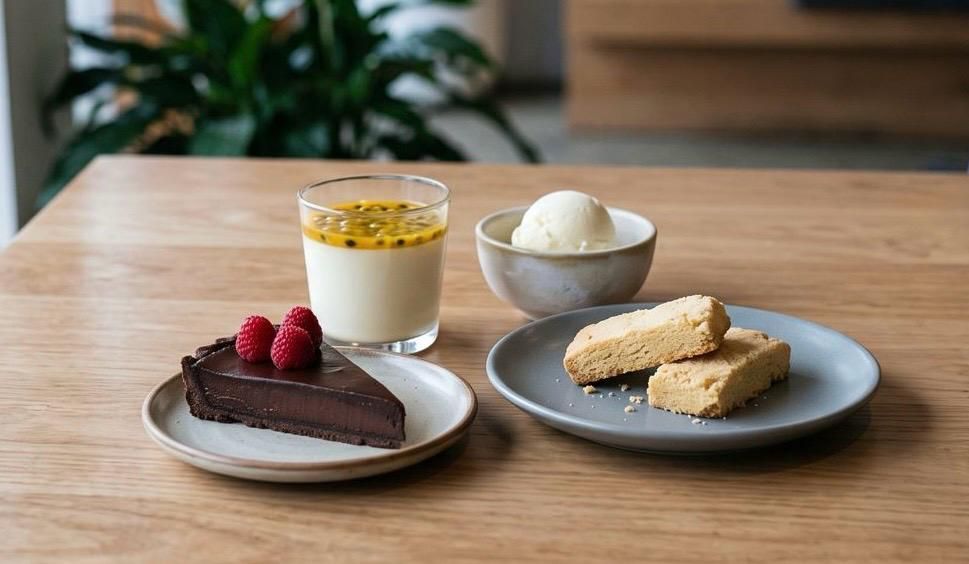
Cookies are crisp, dry or chewy and full of butter and sugar, so they pair best with something creamy or cold. Sandwich two chocolate chip cookies around vanilla gelato, crumble shortbread over panna cotta, or serve a crisp almond biscuit beside chocolate mousse.
Dense, fudgy brownies follow the same logic and need something cold and smooth. Spiced biscuits such as speculoos suit poached pears and baked apples.
Pastries
Choux, croissants, puff pastry and mille-feuille are built on butter and a flaky or hollow structure. They need partners that keep them light: crème pâtissière,
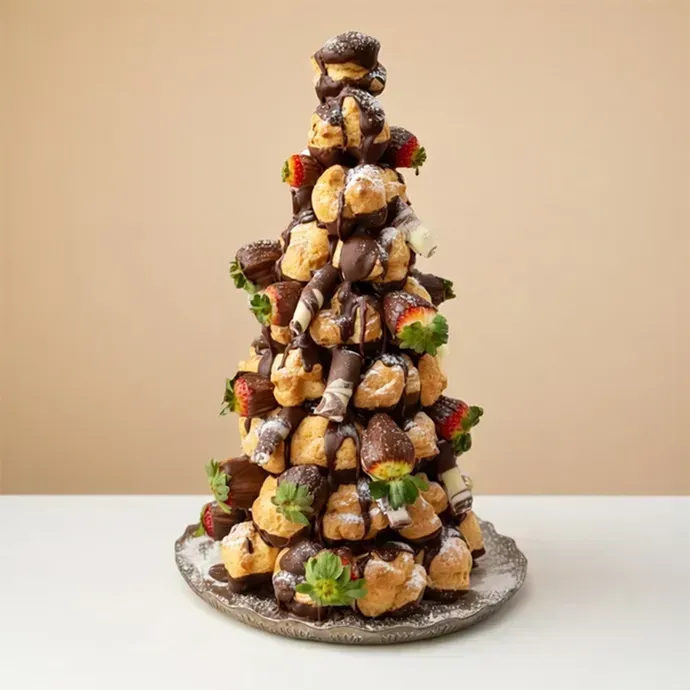
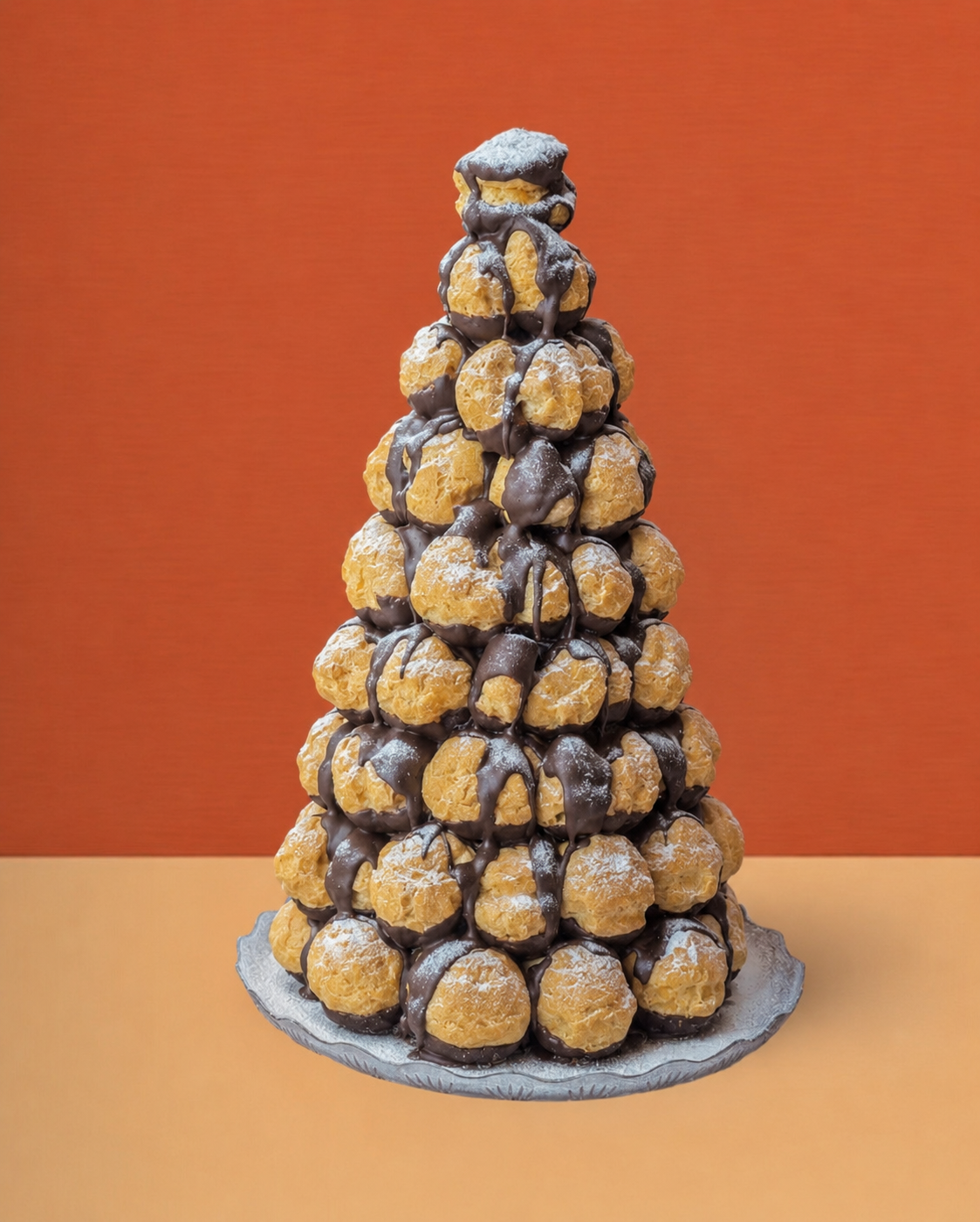
Chantilly cream, fresh berries or a sharp fruit compote. A classic profiterole pairs a crisp choux shell with a cool custard or cream filling and a chocolate finish, covering flavour, texture and temperature in one bite. Pastry softens quickly once it meets a moist filling, so fill choux and assemble mille-feuille as close to serving as you can.
Pies and Tarts
A tart is a crisp shell holding a soft filling, so the texture contrast is already built in. The pairing job is to balance the filling. Fruit tarts suit lightly sweetened cream or crème fraîche, and chocolate tarts need salt, berries or a little coffee bitterness.
Lemon tarts are sharp enough that a spoonful of cream or a crown of toasted meringue is all they need. Serve fruit pies and tarte Tatin warm with ice cream to add temperature contrast.
Custards, Puddings and Mousses
Crème brûlée, panna cotta, sticky date pudding, mousse and pots de crème are smooth all the way through, so their partner should almost always bring crunch: a tuile, shortbread, praline, crumble or toasted nuts. Crème brûlée builds this in with its caramelised sugar crust.
Sticky date pudding, warm and heavy with butterscotch sauce, needs cold cream or vanilla ice cream to lighten it. Panna cotta is mild enough to carry sharp fruit, such as passionfruit pulp or poached rhubarb.
Frozen Desserts
Ice cream, gelato and sorbet are the most flexible partners on any dessert plate, because a single scoop can add cold, creaminess or acidity. Use ice cream or gelato to soften warm, dense desserts like brownies, puddings and fruit pies. Use sorbet to cut rich ones: a raspberry or lemon sorbet beside a chocolate tart refreshes the palate between bites.
Ashta, the Lebanese clotted cream often scented with orange blossom or rose water, pairs naturally with pistachio, which is why we make a pistachio version of our Ashta Ice Cream Cake.
Confections
Chocolates, truffles, fudge, nougat and macarons are small and intense, so they pair best in small portions beside something that refreshes the palate: fresh berries, citrus segments or a sharp sorbet.
On a platter, place macarons and truffles next to fruit instead of next to other rich confections, and offer one or two flavours of each so they don't blur together.
The 5 Cs: Building a Balanced Dessert Menu or Cabinet
This section is for anyone planning a café cabinet, a restaurant dessert list or a large dessert table. Pairing at this level is about how a whole range of desserts works together.
What the 5 Cs Are
The 5 Cs are a menu-planning framework taught in professional pastry training, including BCcampus's guide to planning dessert menus: chocolate, citrus, coffee, custard (or cheesecake) and caramel. Covering all five gives almost every customer something they'll want and builds variety into the range.
| The C | Its Role on the Menu | Example Desserts |
|---|---|---|
| Chocolate | The most requested flavour; worth offering in two styles | Mud cake, chocolate mousse cake, ganache tart |
| Citrus | The fresh, lighter choice after a big meal | Lemon meringue tart, orange cake, lime posset |
| Coffee | A bittersweet option with adult appeal | Tiramisu, coffee éclair, opera cake |
| Custard or cheesecake | Creamy comfort | Crème brûlée, baked ricotta cheesecake, vanilla slice |
| Caramel | Rich and nostalgic | Salted caramel tart, sticky date pudding, caramel slice |
Don't Repeat Your Hero Ingredient
Next, check that no two items share the same main flavour. Two chocolate desserts are fine, and usually necessary, as long as they differ in style: a dense mud cake beside a light mousse cake, or dark chocolate beside white.
Two lemon desserts, or two raspberry ones, compete with each other and make the range feel smaller than it is. The same rule helps when you set up a dessert table at home: give each item its own hero flavour.
Balance Richness, Texture and Temperature Across the Range
Look across the range the way a customer does: you want at least one light or fruit-led option, one crisp or baked item, something creamy and, in winter, something served warm. Keeping the list to five to eight items, as the BCcampus guide suggests, makes it easier to produce every one consistently.
In our stores, fruit-led cakes and cheesecakes move to the front through summer, while chocolate, caramel and custard carry the cabinet through winter, and our bestsellers stay constant all year. Chefs planning a plated menu can run the same check on every dish: contrast in taste, texture and temperature.
Where Do Drinks Fit In?
Drinks follow the same principles. Match intensity first, then use the drink as a balancer: espresso's bitterness cuts a sweet pastry, the acidity in tea or sparkling wine lifts a creamy dessert, and a cold drink refreshes the palate after something warm and heavy.
The most common mismatch is a sweet drink with a sweet dessert, so if the dessert is very sweet, choose the drier drink.
Common Dessert Pairing Mistakes to Avoid
Most pairings that fall flat fail in one of five ways. The first is rich with rich: chocolate mud cake with chocolate sauce and chocolate ice cream, where nothing cuts through. Its close cousin is sweet with sweet, such as a sugary syrup on a sponge with sweetened cream. Crowding is the third, when five flavours on one plate leave none of them clear.
Temperature trips people up too: a fridge-cold cheesecake hides its flavour, and gelato beside a dessert straight from the oven melts before you reach it. The last mistake is ignoring texture, which is how soft cake, soft mousse and soft cream end up on one plate. Every fix comes from the principles above: add acid, salt or bitterness, cut back to two main flavours, and give each plate one crisp element and one temperature contrast.
Great Dessert Pairing Is Balance You Can Taste
Every pairing in this guide comes back to balance. Acid, salt and bitterness hold sugar in check, a crisp element gives a soft dessert something to push against, and a warm and cold contrast makes both sides taste more vivid. The technical details carry the most weight: a curd sharp enough to cut through cream, a base baked until it properly snaps, a cheesecake taken out of the fridge long enough for its flavour to open up.
At home or on a café menu, those small decisions are what make a dessert taste complete.
Start small. Take a dessert you already make or love, taste it, work out which principle it's missing, then add one partner and taste again.
Every cake, tart and pastry we make at Profiterole Patisserie goes through that same balancing of flavour, texture and temperature before it reaches our cabinet.
I'd love for you to visit any of our Profiterole Patisserie stores and put a few of these pairings to the test, or you can order our cakes online and we'll have them delivered the next day.
Publish date: 15/10/2026

Joey Yaccoub
Head Baker & Operations Manager, Profiterole Patisserie
Joey Yaccoub is the Head Baker at Profiterole Patisserie, bringing over a decade of hands-on experience in artisan cake design and pastry craftsmanship.
He oversees recipe development, product quality, and daily operations across all store locations, ensuring every cake meets the brand’s standards for flavour, presentation, and consistency.
FAQs
What are some good dessert pairings?
Good dessert pairings put a dessert next to an accompaniment that adds what it's missing. Reliable examples include a warm brownie with vanilla gelato, chocolate tart with raspberry sorbet, sticky date pudding with cream, apple pie with vanilla ice cream, panna cotta with passionfruit, cheesecake with berry coulis and lemon tart with whipped cream. Each one contrasts flavour, texture or temperature.
What are the 5 C's of dessert?
The 5 Cs of dessert are chocolate, citrus, coffee, custard (or cheesecake) and caramel. Pastry chefs and café owners use them as a menu-planning framework: covering all five gives customers a choice of rich, fresh, bittersweet, creamy and nostalgic flavours, so almost everyone finds something they want. The next step is making sure no two desserts share the same hero ingredient.
What are some good dessert combinations?
For a platter or dessert table, combine desserts that differ in flavour, texture and richness. A chocolate mousse cake, a lemon tart and a plate of shortbread work well together, as do profiteroles, fresh fruit tartlets and macarons. Include one rich chocolate option, one fresh fruit or citrus option and one crisp item, and avoid repeating the same main flavour.
What are some good dessert flavour pairings?
Classic dessert flavour pairings include dark chocolate and raspberry, chocolate and hazelnut, lemon and blueberry, caramel and apple, coffee and mascarpone, pistachio and raspberry, white chocolate and passionfruit, mango and coconut, and strawberries and cream. They work because the two flavours either share a quality, such as caramel and roasted apple, or balance each other, like sharp raspberry against rich chocolate.
What are 7 types of desserts?
Desserts are commonly grouped into seven types:
- Cakes
- Cookies and biscuits
- Pastries
- Pies and tarts
- Custards, puddings and mousses
- Frozen desserts
- Confections
Each type has a different structure, which is why the best accompaniment changes from one to the next.
Great dessert pairing starts at Profiterole Patisserie
Profiterole Tower - Classic Chocolate
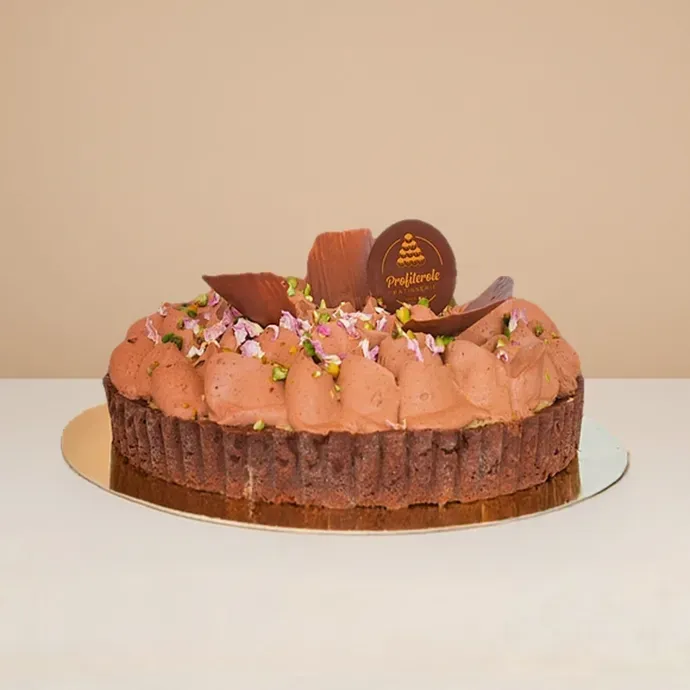
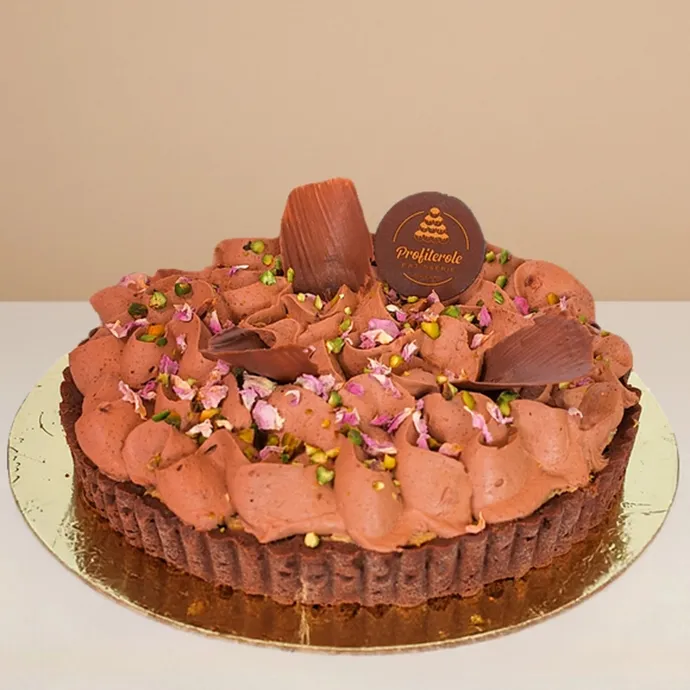
Dubai Chocolate Cake
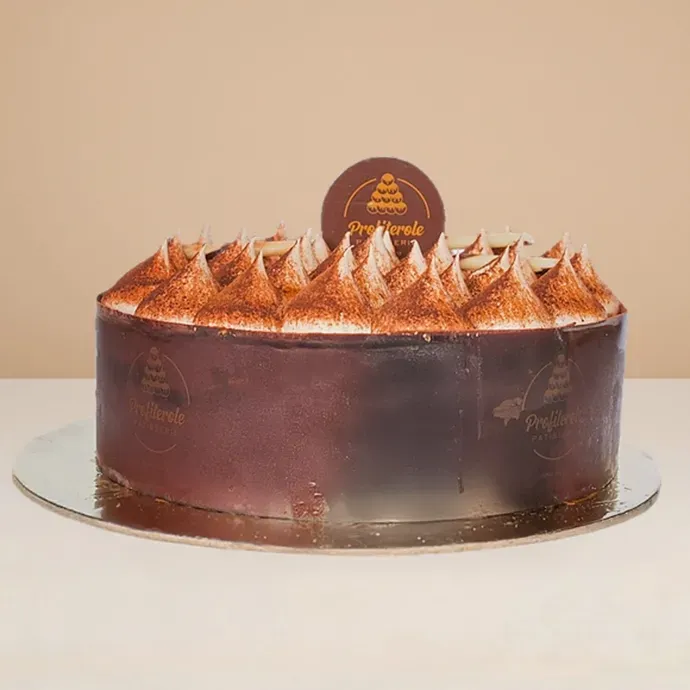
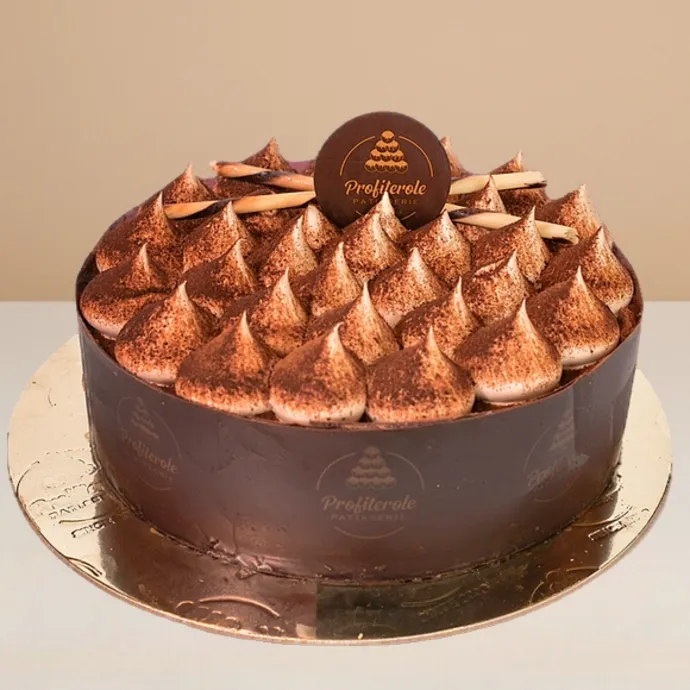
Tiramisu Cake
Pistachio Raspberry Bliss Cake
Ferrero Rocher Cake
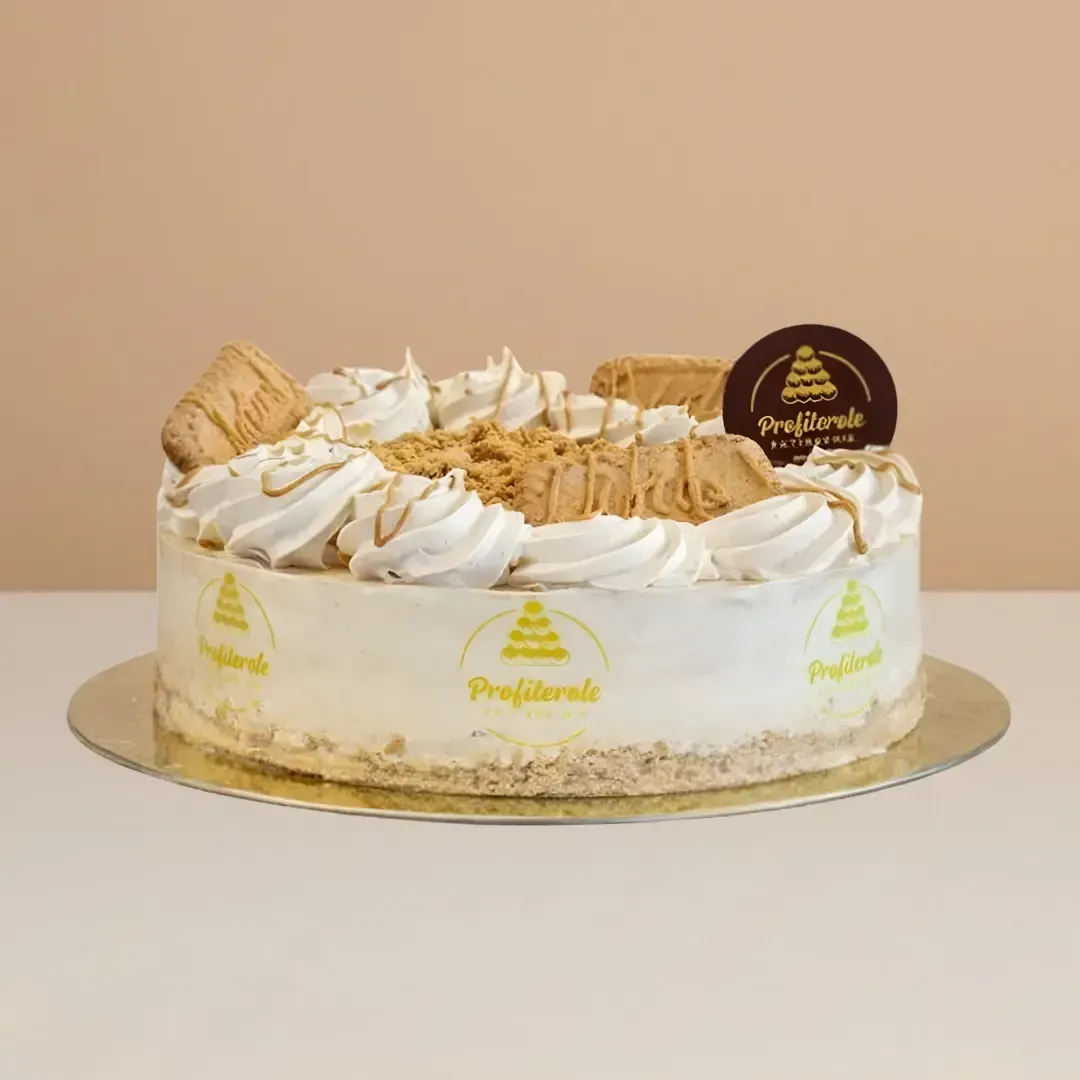
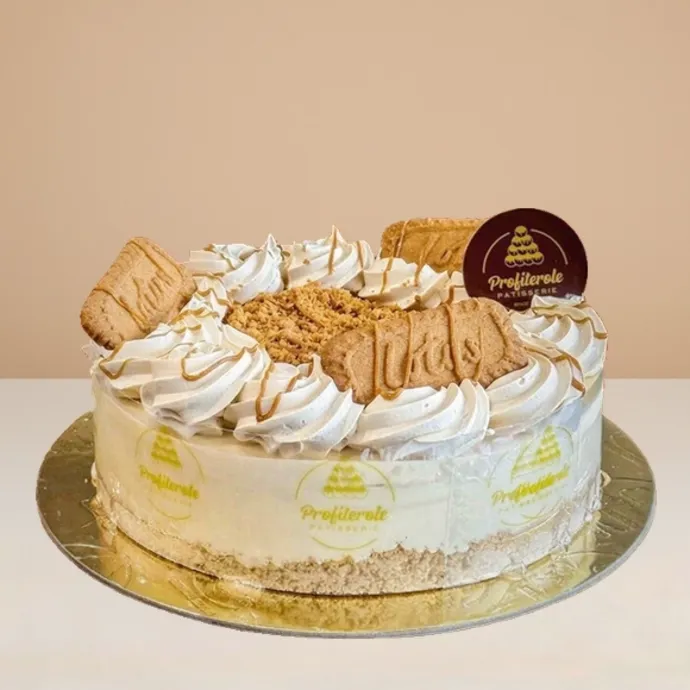
Lotus Biscoff Cheesecake

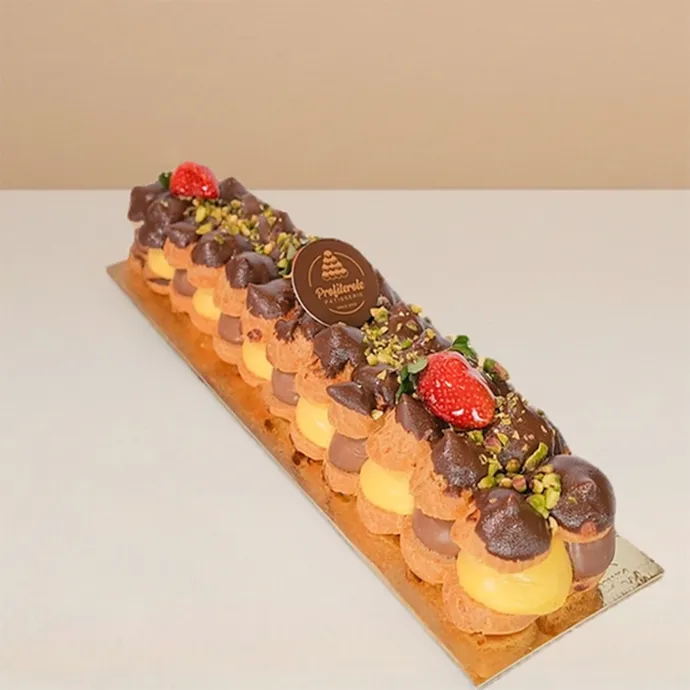
Profiterole Log Cake
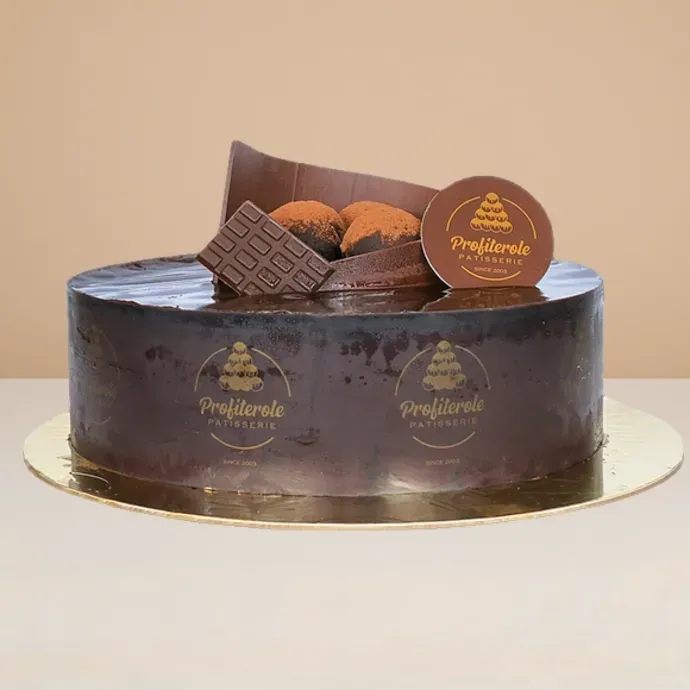
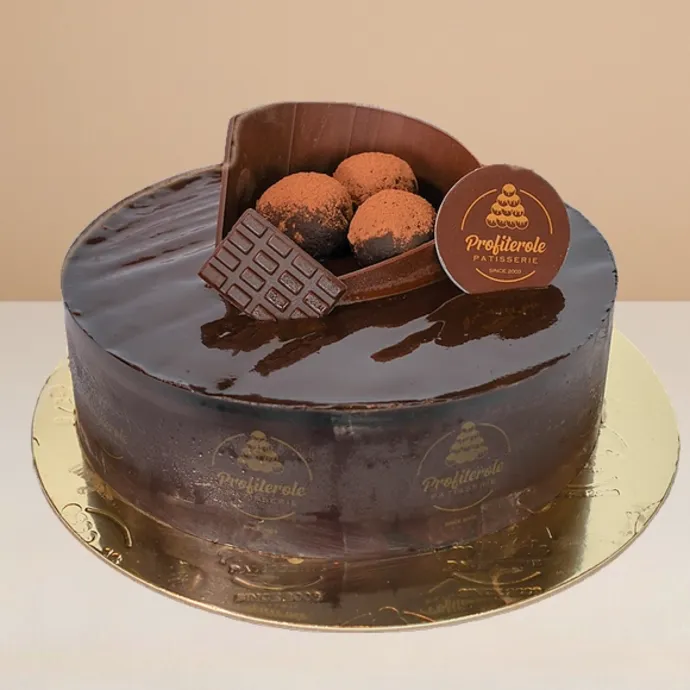
Chocolate Mousse Cake
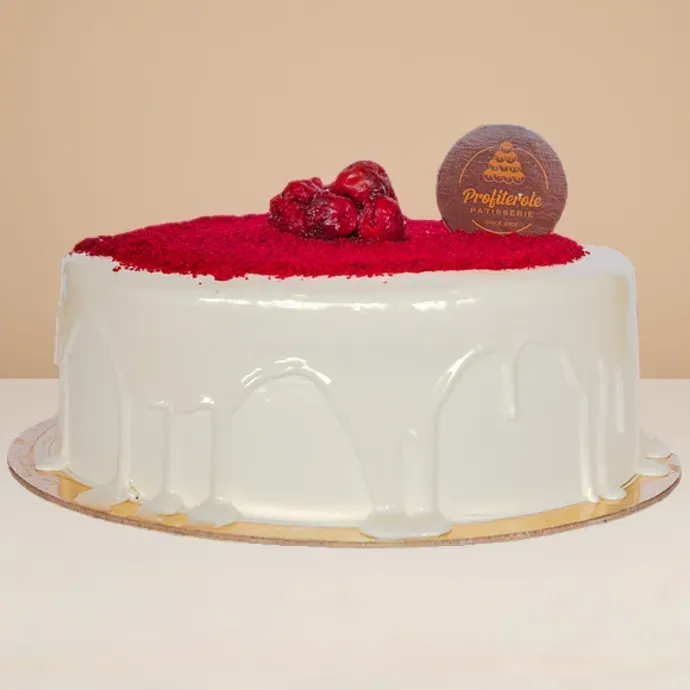
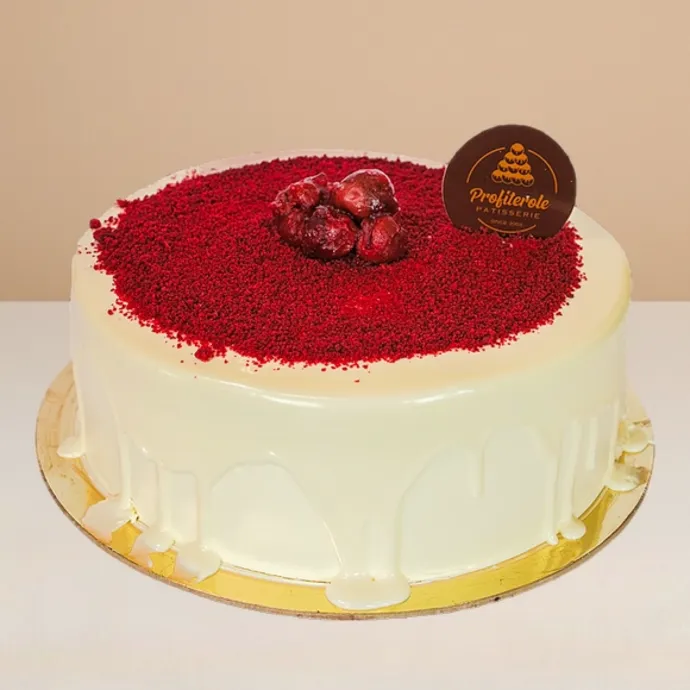
Red Velvet Cake
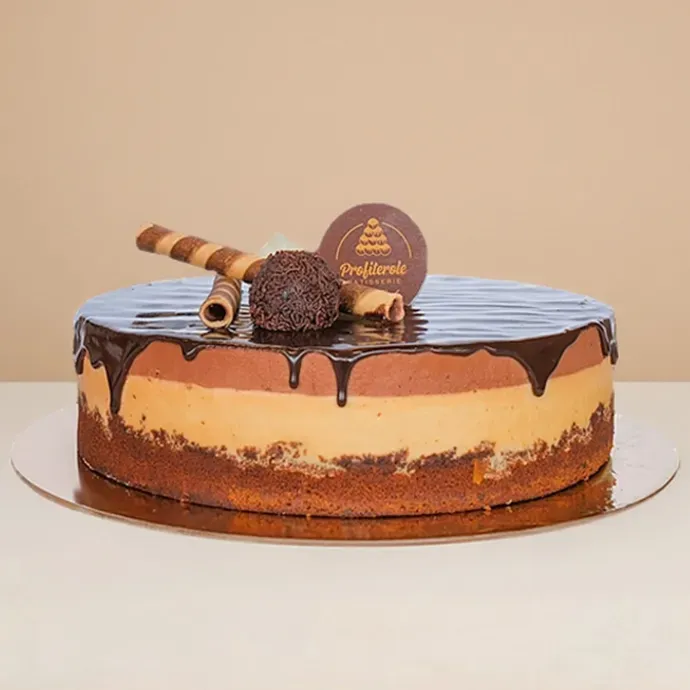
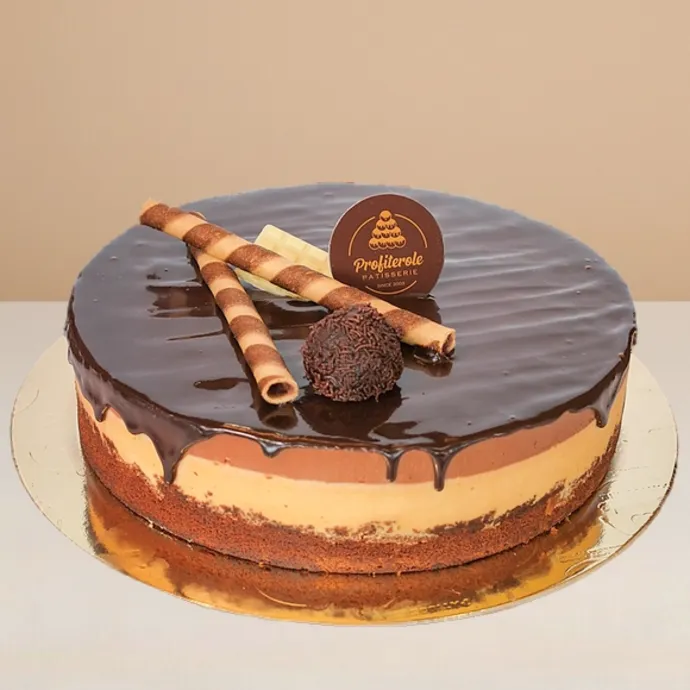
Trio Cake - Round
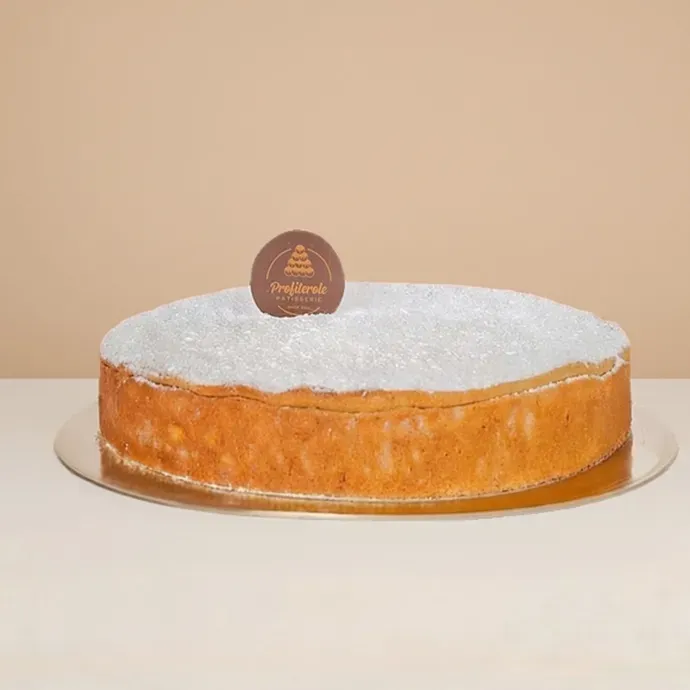
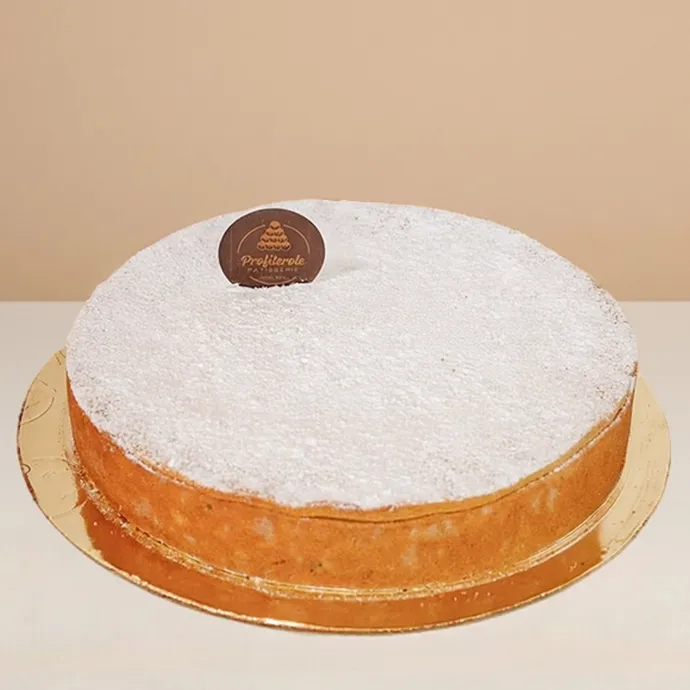
Baked Ricotta Cheesecake
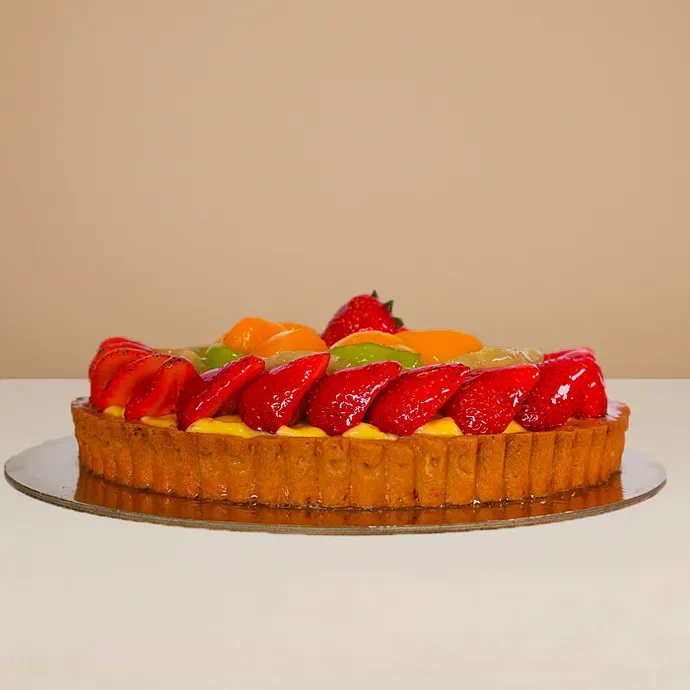
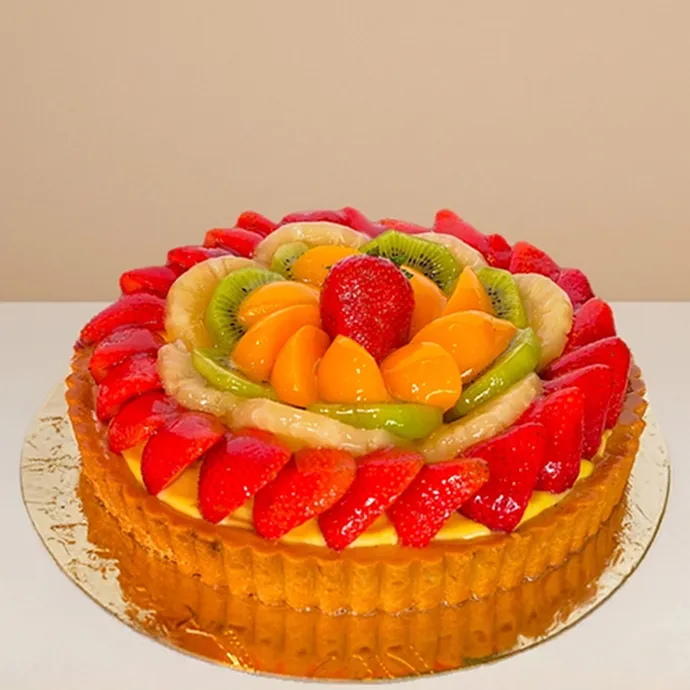
Fruit Cake - Round
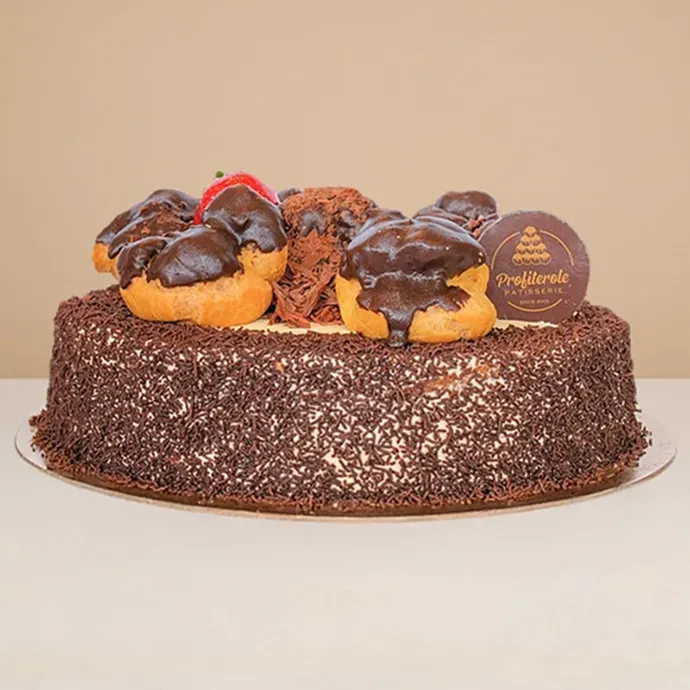
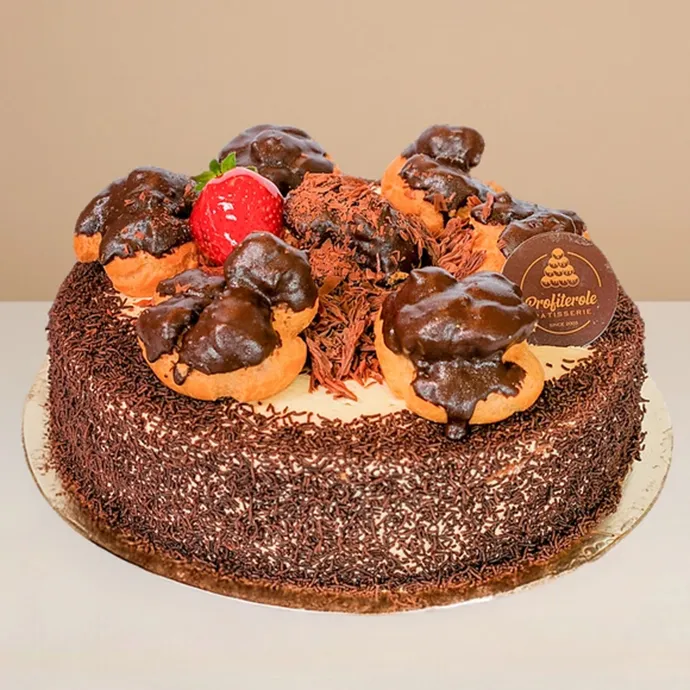
Chocolate Profiterole Cake
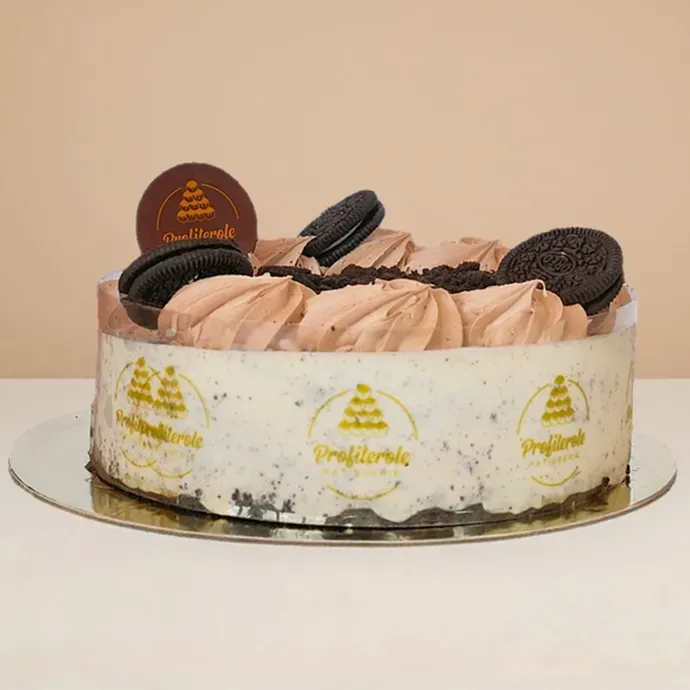
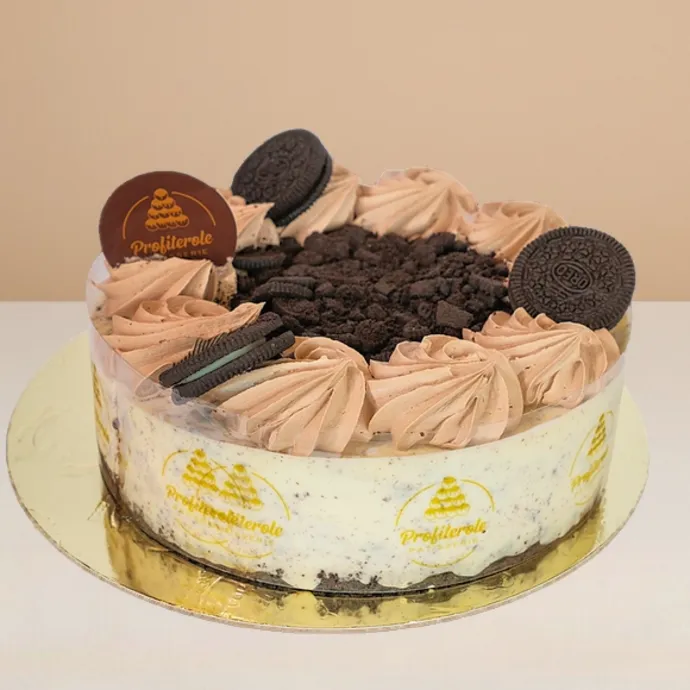
Oreo Cheesecake
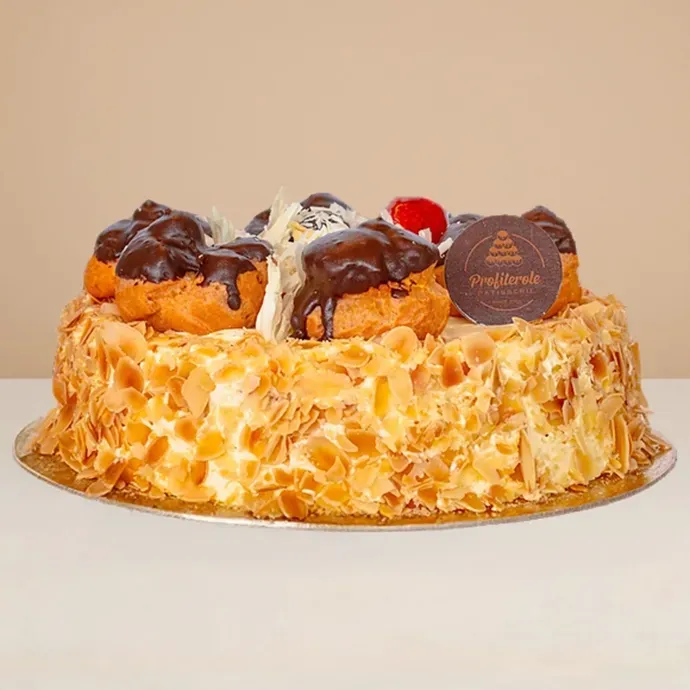
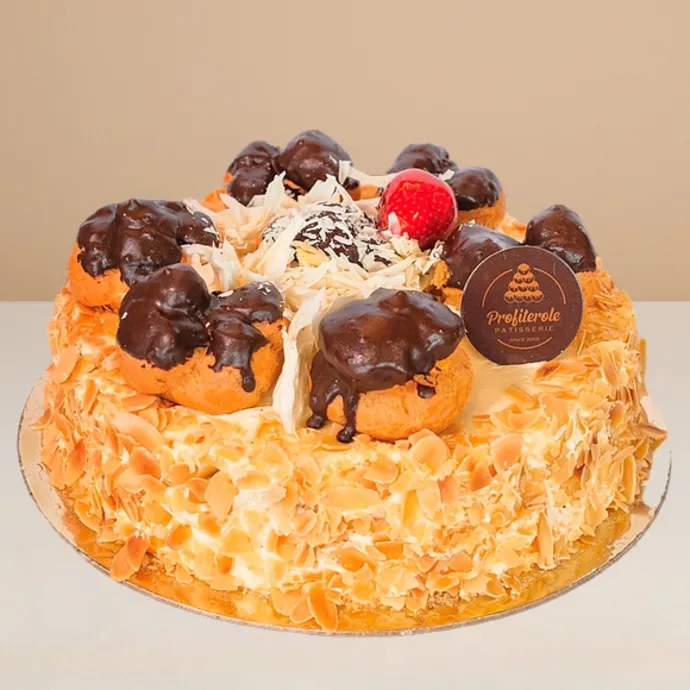
White Profiterole Cake
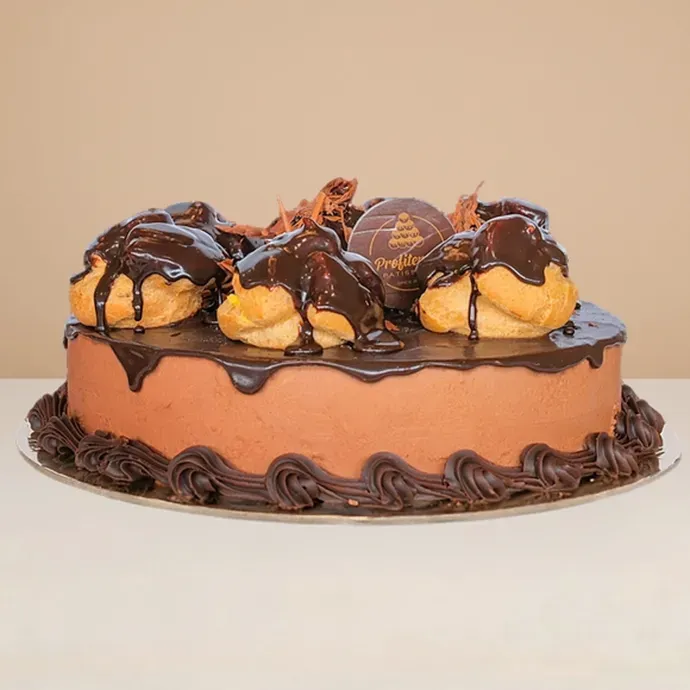
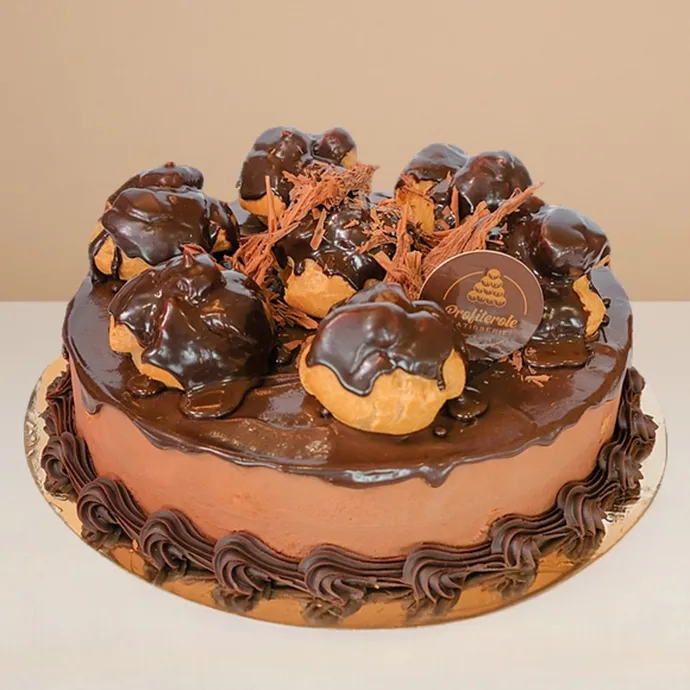
Mousse Profiterole Cake
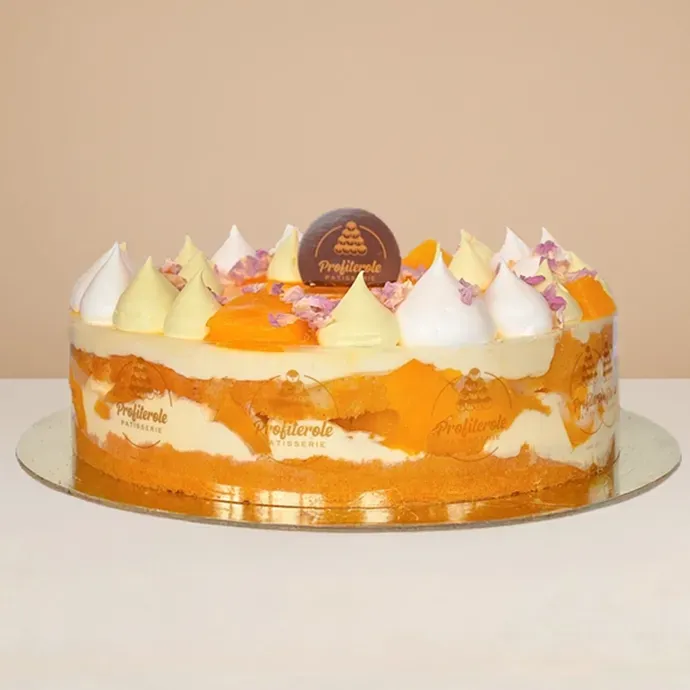
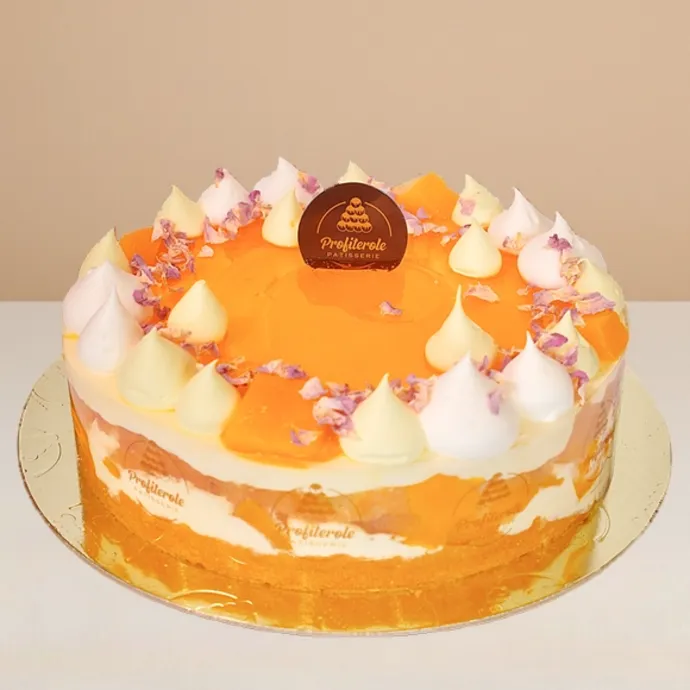
Mango Cake